


Bimetallic Conductors: Performance and Cost-Effectiveness Without Compromise
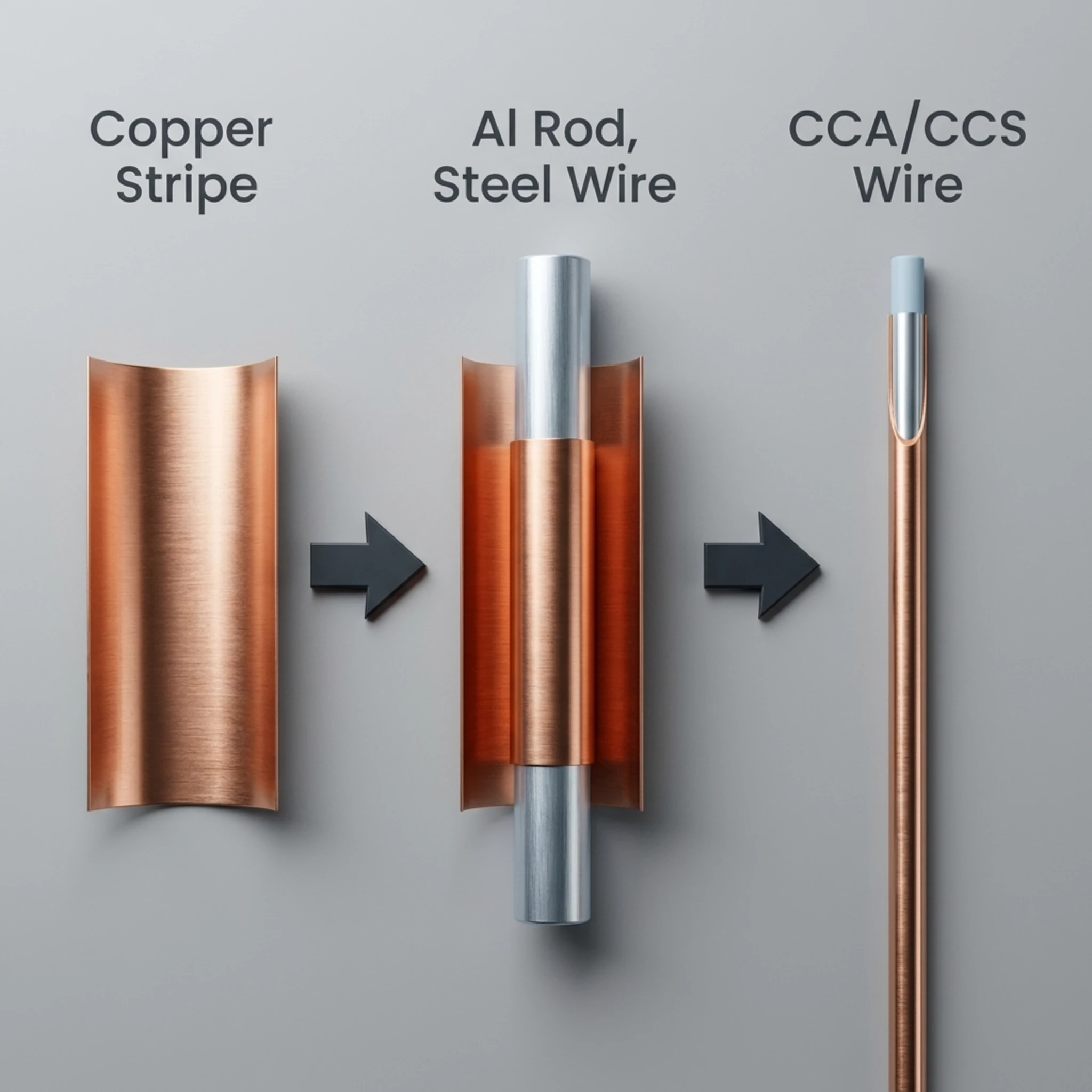
Discover our range of CCA, CCS and CCAA bimetallic conductors: efficiency, reliability and innovation for every power and telecommunications application.
Our materials combine the properties of copper and aluminium to ensure high conductivity, mechanical strength and cost reduction.
They are the ideal choice for power, telecommunications and special cabling applications, offering one of the best performance-to-price ratios on the market.
Both product ranges, CCA and CCS, are manufactured using Cladding technology, which ensures a perfect metallurgical bond at the interface between the two metals and enables drawing into smaller-diameter wires while maintaining excellent properties.
CCA PERFORMANCE VS. COPPER:
| MATERIAL | DIAMETER | AREA | WEIGHT | RESISTANCE | WEIGHT SAVINGS COMPARED TO COPPER |
|---|---|---|---|---|---|
|
MATERIAL
UNIT
|
DIAMETER
mm
|
AREA
kg/km
|
WEIGHT
kg/km
|
RESISTANCE
Ω/km
|
WEIGHT SAVINGS COMPARED TO COPPER
%
|
|
MATERIAL
COPPER
|
DIAMETER
1,129
|
AREA
1,00
|
WEIGHT
8,94
|
RESISTANCE
17,49
|
WEIGHT SAVINGS COMPARED TO COPPER
0
|
|
MATERIAL
CCA 10%
|
DIAMETER
1,428
|
AREA
1,60
|
WEIGHT
5,31
|
RESISTANCE
17,49
|
WEIGHT SAVINGS COMPARED TO COPPER
40
|

CCA
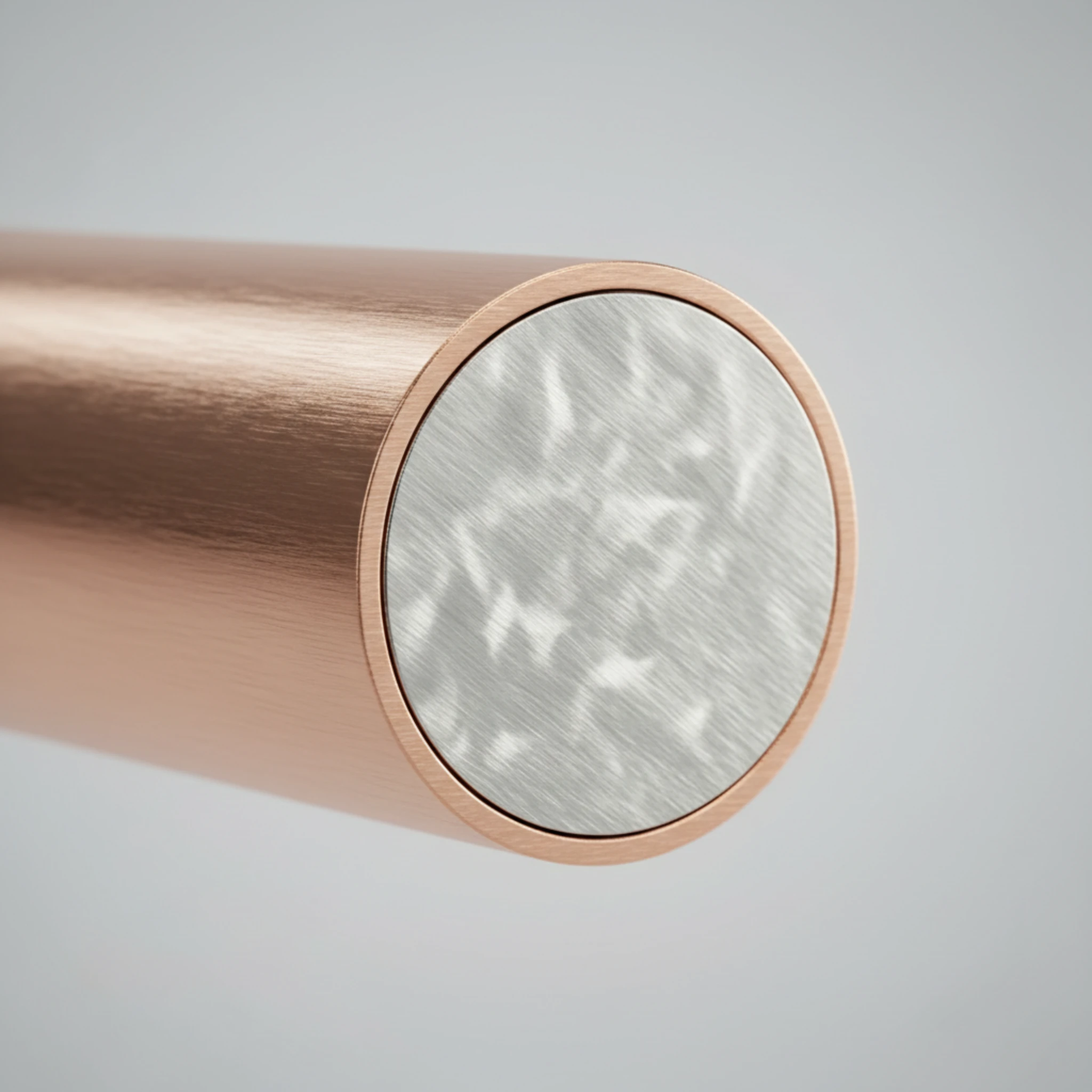
This configuration combines the key properties of both metals: the high electrical conductivity and corrosion resistance of copper with the lightweight and ductility of aluminum, resulting in a composite material with optimized performance and reduced cost.
CCA wire is available in the following versions:
- Annealed (A) – annealed, for applications requiring high flexibility;
-
Hard Drawn (H) – hard-drawn, for applications requiring higher mechanical strength.
The typical electrical conductivity of 10% CCA conductors is approximately 63% IACS (International Annealed Copper Standard), in accordance with the requirements of ASTM B566.
CCA is available with different copper cladding percentages, typically 10% and 15%, depending on specific conductivity and strength requirements.
APPLICATIONS
- HIGH-FREQUENCY SIGNAL TRANSMISSION
- TRANSMISSION POWER
- COMPUTER CABLES, CONDUCTORS

CCS
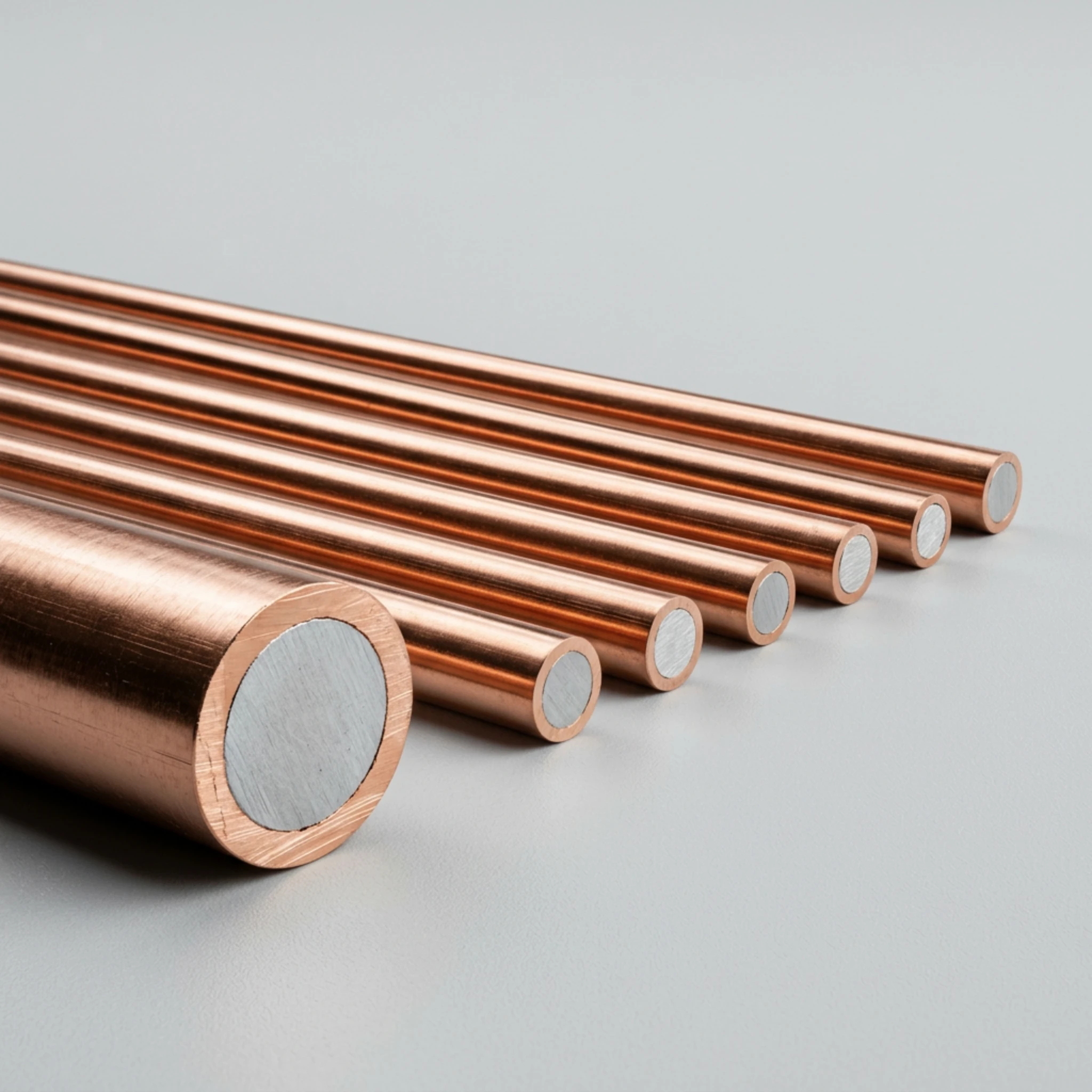
Copper Clad Steel (CCS) is a bimetallic conductor manufactured using cladding technology, combining a steel core with a uniform copper coating.
This composite structure ensures excellent adhesion between the two metals and maintains its integrity even after drawing to very small diameters (down to 0.16 mm or smaller).
CCS is available in the following versions:
- Annealed (A) – annealed, offering greater ductility and flexibility;
- Hard Drawn (H) – hard-drawn, characterized by high mechanical strength.
Depending on the copper content and the degree of drawing, the material offers different levels of electrical conductivity, expressed as IACS values (International Annealed Copper Standard):
- 21% IACS
- 30% IACS
- 40% IACS
Thanks to its combination of mechanical strength and good electrical conductivity, Copper Clad Steel (CCS) is an excellent solution for electrical and telecommunications applications requiring high performance and long service life.
APPLICATIONS
- COAXIAL CABLES
- OVERHEAD POWER AND TELECOMMUNICATIONS CABLES
- STRANDED CONDUCTORS IN VARIOUS SIZES
- LAN CABLES, UTP CABLES, ELECTRONIC COMPONENTS – CABLES
- SPECIALTY CABLES
- MILITARY APPLICATIONS

CCAA
Copper Clad Aluminum Alloy (CCAA)
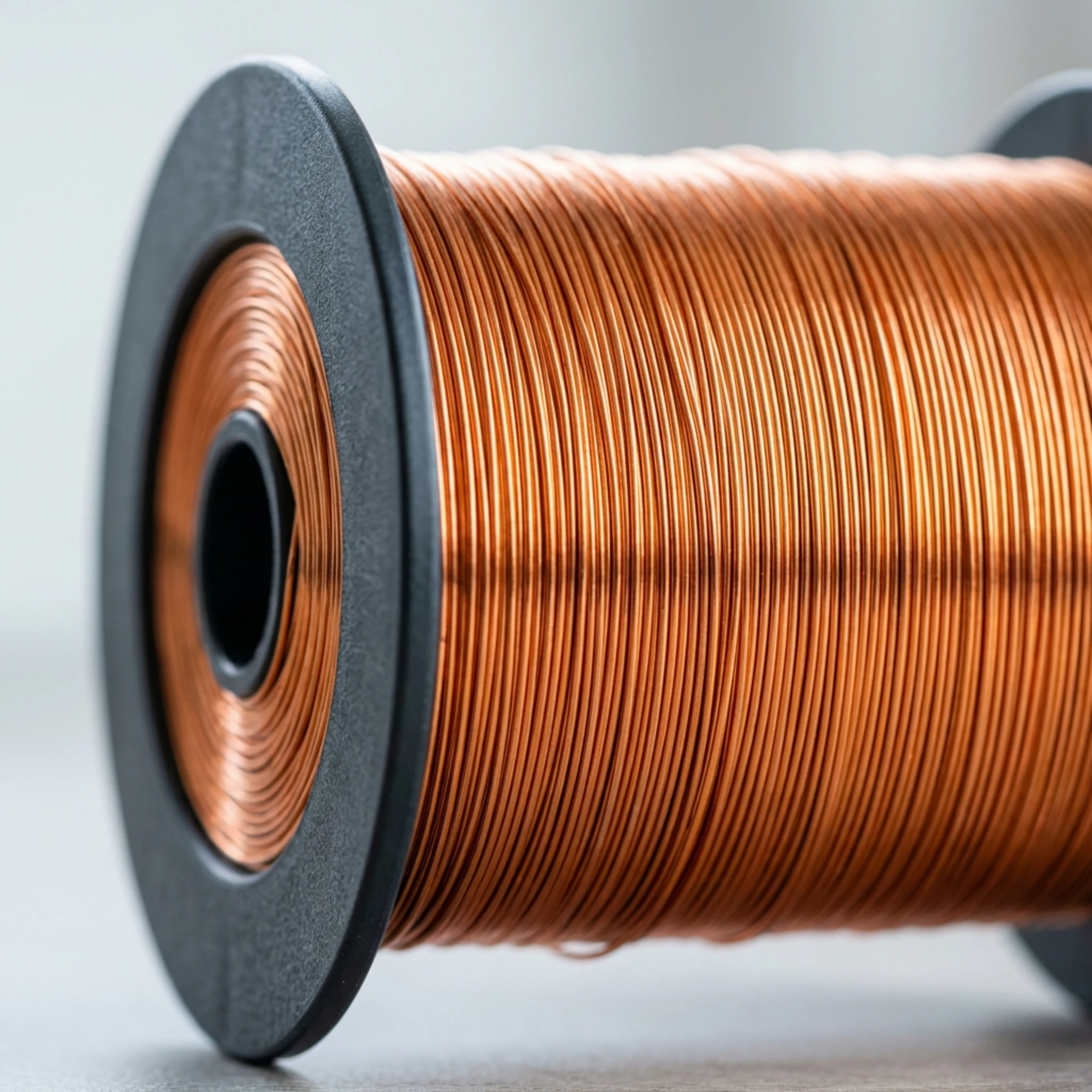
The CCAA – also known as high-conductivity, high-strength copper-clad aluminum wire – is a next-generation bimetallic conductor made from 8000-series aluminum alloy, grade 8030 (enhanced).
Thanks to advanced cladding and cladding-welding techniques, high-purity copper is applied concentrically and uniformly to the aluminum alloy core, ensuring excellent adhesion between the materials.
The resulting wire is subsequently drawn to various diameters, maintaining high performance in terms of electrical conductivity, mechanical strength and lightweight construction.
APPLICATIONS
- ELECTRONIC LINES
- "soft wire" ( CRVVl.5, RVV2.5 etc. )
- POWER LINE CONDUCTOR SHIELDING
- network (fivecable, sixcable)
- COMPUTER PERIPHERALS
- MICROCOAXIAL CABLES AND SHIELDING
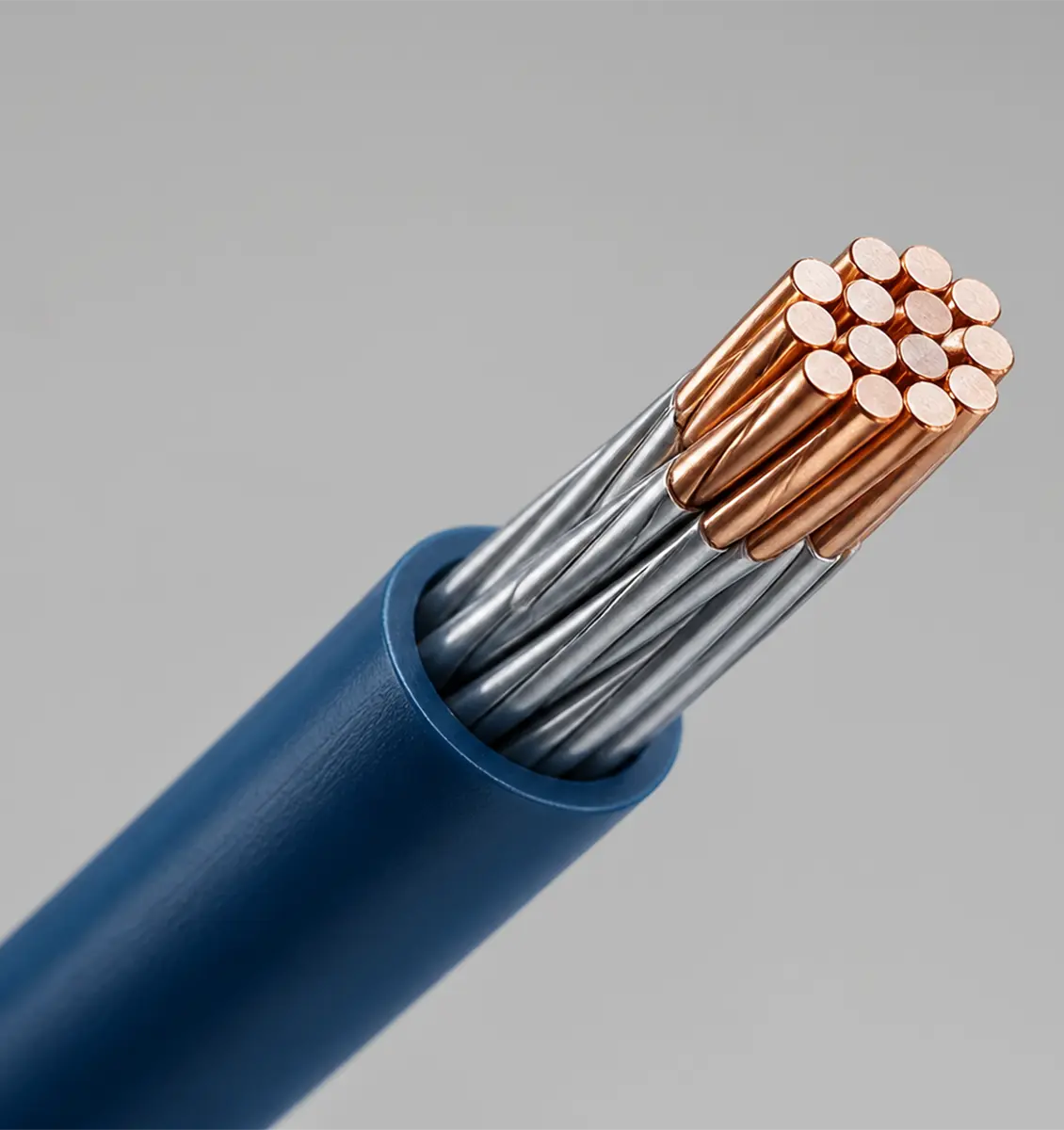
10% CCA Flexible Stranded Conductors
Class 5
One example is the 25 mm² flexible conductor, compliant with ACEA specifications for cables used in street lighting.
This conductor effectively replaces 16 mm² copper, offering equivalent electrical resistivity while providing significant savings in both weight and material costs.li.
KEY STRENGTHS
- SUPERIOR MECHANICAL PROPERTIES COMPARED TO COPPER, PARTICULARLY TENSILE STRENGTH
- IDEAL FOR COMBINING ELECTRICAL AND MECHANICAL PERFORMANCE WITHIN THE SAME CONDUCTOR
- “SKIN EFFECT” – SUITABLE FOR HIGH-FREQUENCY APPLICATIONS SUCH AS TELECOMMUNICATIONS AND GROUNDING
- HIGHLY INTERESTING ELECTRICAL PERFORMANCE FOR ANTI-THEFT APPLICATIONS

EUROPEAN HUB
EUROPEAN HUB
EUROPEAN HUB
EUROPEAN HUB
EUROPEAN HUB
EUROPEAN HUB

LOGISTICS AND SERVICES
We manage import, storage and distribution through an integrated approach.
Our European hub enables us to reduce delivery times and ensure a consistent supply, even for large volumes.
Sogo Italiana stands for operational efficiency, customs expertise and personalized attention to every customer.
Alcune domande frequenti
Cosa sono i conduttori bimetallici?
Qual è la differenza tra CCA, CCS e CCAA?
- CCA (Copper Clad Aluminum) → anima in alluminio + rivestimento in rame → leggero e conveniente
- CCS (Copper Clad Steel) → anima in acciaio + rivestimento in rame → più resistente meccanicamente
- CCAA (Copper Clad Aluminum Alloy) → lega di alluminio + rame → maggiore performance rispetto al CCA
Ogni soluzione è progettata per applicazioni diverse in base a esigenze tecniche e prestazionali.
Quali sono i vantaggi rispetto al rame puro?
I conduttori bimetallici offrono diversi vantaggi:
- riduzione dei costi
- minor peso
- buona conducibilità elettrica
- maggiore resistenza alla corrosione
- minore rischio di furto rispetto al rame
I conduttori bimetallici sono affidabili nel tempo?
ì. Grazie alla tecnologia cladding, il rivestimento in rame è legato in modo stabile all’anima interna, garantendo durata e prestazioni anche dopo lavorazioni come la trafilatura.
In quali settori vengono utilizzati?
I prodotti trovano applicazione in diversi ambiti:
- cavi energia
- telecomunicazioni
- networking e trasmissione dati
- elettronica
- applicazioni ad alta frequenza
È possibile sostituire il rame con il bimetallo?
Sì, in molte applicazioni il bimetallo rappresenta un’alternativa valida al rame.
A parità di resistenza elettrica, è possibile ottenere un notevole risparmio di peso e costi mantenendo prestazioni adeguate.
Offrite soluzioni personalizzate?
Sì. Sogo Italiana supporta i clienti nella scelta del prodotto più adatto in base a:
- applicazione
- performance richieste
- vincoli tecnici
- obiettivi di costo
Do you need a solution
for power or telecommunications cables?
Contact us to receive a tailored proposal.