


Energy Transition and Distribution: Why Bimetallic Conductors Are Gaining Ground
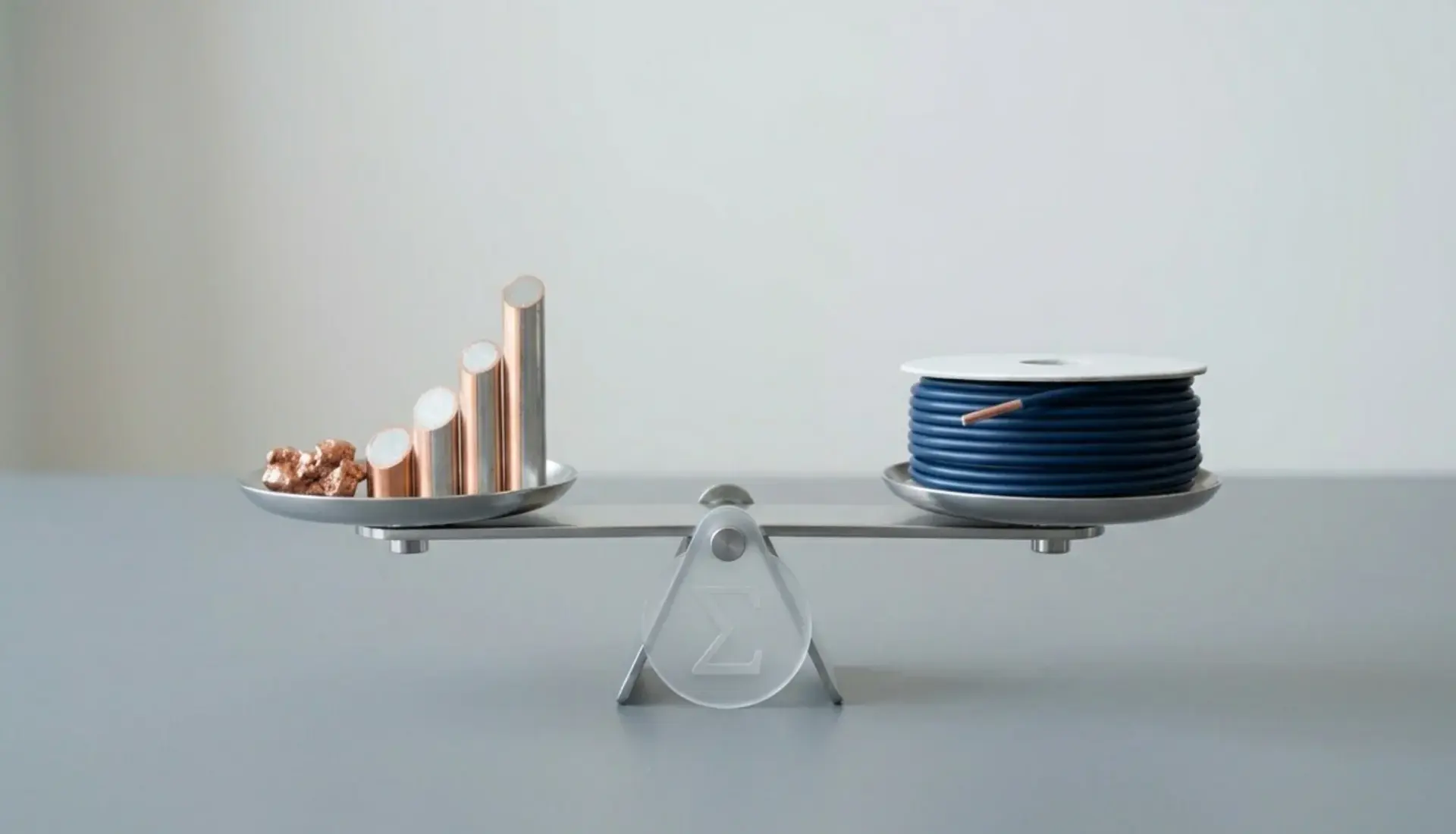
The energy transition is not just about renewable energy generation, energy storage and electric mobility. It also concerns a less visible but crucial issue: the ability of power grids and the cable industry to support greater electrification, more connections and increasing pressure on costs, procurement lead times and material availability. In this context, bimetallic conductors are gaining attention because they help balance performance, weight, mechanical strength, surface protection and cost competitiveness in specific applications.
For companies operating in the cable, energy and telecommunications sectors, the question is no longer simply “copper or no copper.” The right question is: which material makes sense for a given application, taking into account specifications, workability, logistics, required strength and industrial objectives? This is precisely where bimetallic conductors, particularly CCA, CCAA and CCS, come into play: as a technical option to be evaluated systematically, rather than as a shortcut.
Sogo Italiana has been operating in distribution since 1989 and, since 2016, has made bimetallic conductors its core business, with a stated focus on applications for power and telecommunications cables. For those seeking a specialised partner, this positioning is significant because it demonstrates commercial continuity and a strong concentration of expertise in a specific product family.
Overview of Bimetallic Conductors
Bimetallic conductors are gaining traction because the energy transition is increasing demand for grids, components and materials, while markets are calling for greater efficiency, shorter delivery times and tighter cost control.
In Europe, the European Commission forecasts an increase in electricity consumption of around 60% by 2030 and highlights the need for more digitalised, decentralised and flexible grids, with substantial investment also required in distribution networks. At the same time, the IEA points to longer procurement lead times and rising prices for cables and transformers.
In this context, materials such as CCA, CCAA and CCS become attractive when specific combinations of electrical conductivity, weight, mechanical strength, workability and cost competitiveness are required.
Who Is It For and When Is It Needed?
This topic is of particular interest to those involved in the design, manufacture, distribution or procurement of materials for cables and conductors.
Specifically, it concerns:
- cable manufacturers evaluating technical alternatives to solid copper for specific applications;
- industrial buyers seeking to balance raw material costs, availability and performance;
- technical departments responsible for selecting materials that comply with specifications, standards and intended applications;
- operators in the energy and telecommunications sectors working with cables subject to different electrical and mechanical requirements;
- companies manufacturing drawn wires, flexible conductors or components where weight and strength are key factors in the final design.
It is particularly useful to explore bimetallic conductors when:
- copper costs have too great an impact on the finished product;
- conductor weight has an impact on logistics or installation;
- a material that can be drawn down to very small diameters is required;
- certain mechanical properties need to be improved compared with alternative solutions;
- there is a need to differentiate the offering in a market increasingly focused on efficiency and supply chain performance.
Why Choose Bimetallic Conductors in Today’s Market?
1. Power Grids Require More Materials and Greater Production Capacity
The European Commission explicitly links the energy transition to the modernisation and expansion of power grids: greater electrification, more distributed renewable energy and increased flexibility all place additional pressure on infrastructure and components. As demand for grid infrastructure grows, so does the focus on material solutions optimised for cost, functionality and availability.
2. Procurement Lead Times Are Becoming Increasingly Important
According to the IEA, lead times for some grid components have increased significantly in recent years. For cables and large power transformers, average lead times have nearly doubled compared with 2021. In this context, the ability to assess alternative materials and specialised supply chains becomes an operational advantage.
3. Comparing Materials with Copper Alone Is No Longer Enough
Bimetallic conductors should not be viewed as “universal substitutes”, but as solutions designed for specific applications. Their purpose is to combine the properties of two metals in a single product: for example, an aluminium or steel core with an outer copper layer, joined through metallurgical cladding. This changes the way the material is evaluated: not out of habit, but according to its intended function.
4. The Balance Between Weight and Performance Has Become More Strategic
Sogo Italiana highlights the lower weight of its CCA 10% wires compared with copper, while maintaining flexibility equivalent to copper in certain applications. In many industrial contexts, reducing weight can have an impact on handling, transportation, installation and the design of the finished product.
5. Cost Competitiveness Is a Tangible Advantage
Sogo Italiana indicates that CCA 10% can offer significantly lower costs than copper for the same electrical resistance in the finished conductor, in specific applications. This is not a universal promise applicable to every project, but an advantage to be assessed on a case-by-case basis when raw material prices and performance trade-offs are key factors.
6. Some Applications Require Greater Mechanical Strength
Not all bimetallic conductors meet the same requirements. CCAA, for example, is presented by Sogo Italiana as a variant offering greater mechanical strength than CCA, while maintaining equivalent electrical conductivity. This is useful when a project requires not only electrical conductivity, but also greater mechanical robustness.
7. CCS Expands the Range of Applications
For CCS, Sogo Italiana offers variants with electrical conductivity levels of 21%, 30% and 40% IACS, as well as annealed or hard-drawn versions and options with tin or silver coatings. This highlights an important degree of flexibility: CCS is not a single material, but a technical product family that can be tailored to the specific application.
8. Drawability Down to Very Small Diameters Is a Key Technical Advantage
One of the distinctive features highlighted by the company is the ability to draw these conductors down to very small diameters, as fine as 0.1 mm, while maintaining good mechanical properties. For manufacturers working with fine wires, telecommunications or highly specialised applications, this is a feature worth careful consideration.
9. Standards and Specifications Enable a More Objective Assessment
Bimetallic conductors are not an unregulated field. For example, ASTM B566 covers bare round copper-clad aluminium wire for electrical applications and defines specific classes such as 10A, 15A, 10H and 15H. When clear technical standards are available, material selection becomes more measurable and less subjective.
What to Consider Before Choosing
Choosing the right bimetallic conductor means starting with the actual application, rather than selecting a material simply because it is “trending”. The most important criteria to assess are the following.
Suitability for the Intended Application
The first question is simple: will the conductor be used in a power cable, telecommunications, a flexible conductor, a component to be drawn, or a cable line with specific mechanical requirements? Without this clarity, comparing CCA, CCAA, CCS and copper risks being misleading.
Actual Electrical Parameters
Electrical conductivity, resistivity and the performance requirements of the project must all be considered, avoiding generic assumptions of equivalence. Sogo Italiana indicates an approximate conductivity of 63% IACS for CCA 10%, with reference to the requirements of ASTM B566. These figures are useful precisely because they enable a more concrete technical comparison.
Mechanical Requirements
Tensile strength, drawing performance, flexibility, annealed or hard-drawn condition, and achievable final diameters are all critical factors. A material that performs well electrically may not be the best choice if the application imposes more demanding mechanical requirements.
Manufacturing Technology
Cladding matters. Sogo Italiana’s website highlights the metallurgical bond at the interface between the two metals as a key factor. Not all composite products are created equal: the manufacturing technology affects the continuity and adhesion of the outer layer, as well as the material’s workability.
Commercial Availability and Supply Continuity
In today’s market, finding a technically sound material is not enough. It is also essential to determine whether a reliable distribution network is in place, with formats, diameters and batch sizes suited to production requirements. With supply chains under increasing pressure, this factor matters more than ever.
Red flags Not to ignore
- comparison based solely on price per kilogram;
- lack of technical references or applicable standards;
- overly generic statements about performance and applications;
- lack of clarity regarding IACS conductivity, finishes, metallurgical condition and available diameters;
- absolute claims such as “always replaces copper”.
A Practical Approach: How to Make an Informed Technical Choice
1. Defining the Application Requirements
The process starts with the intended application, specifications, technical requirements, required diameters, operating environment and industrial objectives. This stage helps prevent errors in the initial approach.
2. Selecting the Material Family
The aim is to determine whether CCA, CCAA or CCS is the most suitable option, taking into account conductivity, weight, mechanical strength, finishes and performance during processing.
3. Verification of Technical References
At this stage, the applicable standards, IACS conductivity values, annealed or hard condition, cladding continuity, and compliance with the specifications required by the end customer or project are verified.
4. Industrial Compatibility Testing
A suitable choice must perform well not only on the technical datasheet but also in actual production processes, including drawing, assembly, stranding, transport, storage, installation and performance in the finished product.
5. Comprehensive Cost Assessment
A meaningful comparison goes beyond material cost alone and considers the total cost, including weight, scrap, logistics, availability, workability, lead times and impact on the finished product. In many cases, this is where bimetallic materials demonstrate their true value.
6. Supply Reliability and Continuity
A specialized distributor can make a real difference when application-specific support is needed, rather than sales support alone. Sogo Italiana positions itself as a company focused on bimetallic conductors for power and telecommunications cables, with European distribution of CCA 10% wires in a range of sizes.
Benefits, Objectives and Expected Outcomes
When the choice is aligned with the application, the expected benefits can be tangible.
Greater Project Cost Efficiency
In suitable applications, the main advantage is the opportunity to optimize both raw material and finished product costs without relying on a purely commodity-driven approach.
Weight Reduction
A lighter conductor can improve transport efficiency, installation, handling and certain aspects of design. This factor is often underestimated, but becomes increasingly significant at high production volumes.
Better Suitability for the Intended Application
CCA, CCAA and CCS offer different combinations of properties. This makes it possible to select the most suitable material based on specific electrical, mechanical and manufacturing performance requirements.
Material Supply Risk Diversification
At a time when the IEA is reporting rising prices and mounting pressure on electricity grid supply chains, having multiple technological options can help strengthen supply chain resilience. It does not eliminate risk, but it reduces dependence on a single material strategy.
Greater Alignment with an Evolving Distribution Market
The energy transition does not reward those who simply have more product to offer, but those who can recommend materials best suited to the intended application. This is where a specialized distributor can play an advisory role as well as a commercial one.
Common Mistakes to Avoid
The first mistake is to regard bimetallic materials as universal substitutes for copper. They are not. They are engineered materials that must be selected according to application-specific criteria.
The second mistake is to assess nominal conductivity alone, without considering mechanical strength, weight, drawability, finishes and compatibility with the manufacturing process.
The third mistake is to overlook standards and product classes. ASTM B566, for example, distinguishes specific classes of copper-clad aluminium conductors. Failure to understand these differences can lead to inaccurate comparisons.
The fourth mistake is to focus solely on the immediate price, without taking lead times, availability, logistics and supply continuity into account. In a market where the IEA reports longer lead times and rising cable costs, this oversimplification can prove costly.
The fifth mistake is to rely on a supplier who cannot link the material to the specific application. With bimetallic materials, the difference between an effective choice and the wrong one often comes down to technical details.
Questions to Ask Before Getting Started
Before evaluating a supply proposal or considering a material change, it is worth asking a few practical questions:
- Which specific application are you recommending CCA, CCAA or CCS for?
- What IACS conductivity values are available for this product?
- Is the material annealed, hard-drawn, tin-plated or silver-plated?
- Which diameters and supply formats are actually available?
- Does the product comply with recognized standards or technical specifications?
- What are its application limitations compared with solid copper?
- How does the material perform during drawing and subsequent processing operations?
- What benefits does it offer in the finished product, beyond raw material savings?
- How reliable is supply continuity over the medium term?
- Are there typical applications in the power or telecommunications sectors for this type of conductor?
Related Insights
CCA, CCAA and CCS: Key differences
These are three distinct material families, each designed to meet different objectives. CCA combines low weight with electrical conductivity; CCAA adds greater mechanical strength; while CCS shifts the balance further towards mechanical robustness, with different IACS conductivity levels available.
Cladding and metallurgical bonding
The quality of the manufacturing process is fundamental. Cladding is not a minor detail: it directly affects coating continuity and the wire’s performance both in service and during processing.
Power distribution and decentralized grids
The European Commission is emphasizing the need for more decentralized and flexible power grids. This is also changing the way the supply chain selects materials and components.
Cable supply chain
The IEA reports tight markets, higher prices and longer lead times for key components. Material selection is no longer just a technical issue, but also an industrial and logistical one.
Minerals and materials for the energy transition
Copper remains essential to the energy transition, and cleantech demand is expected to grow, according to the IEA. This makes it increasingly strategic to assess, where appropriate, material architectures that use copper more efficiently and selectively.
Flexibility and conductive strands
Sogo Italiana also offers flexible 10% CCA stranded conductors in specific cross-sections. This broadens the discussion from the wire itself to the performance of the conductor in the finished cable.
Frequently Asked Questions (FAQs)
What are bimetallic conductors?
They are conductors made of two metals integrated into a single product, for example an aluminium or steel core with an outer copper cladding. The aim is to combine different properties, such as electrical conductivity, weight, mechanical strength and surface protection.
Why are bimetallic conductors gaining attention in the energy transition?
The energy transition is increasing the need for power grids, components and investment. The European Commission forecasts significant growth in electricity demand and is calling for more modern grid infrastructure, while the IEA also highlights pressures on costs and procurement lead times. In this context, materials optimized for specific applications are attracting growing interest.
Do bimetallic conductors always replace copper?
No. They are not a universal replacement for copper. They are suitable for applications that match their electrical, mechanical and manufacturing characteristics. The choice should be based on technical specifications and intended use, not on marketing claims.
What is the difference between CCA, CCAA and CCS?
CCA is copper-clad aluminium; CCAA uses an aluminium alloy core to improve mechanical strength compared to standard CCA; CCS is copper-clad steel and is available in different IACS conductivity levels. Each material family is designed to meet different requirements.
Are there reference standards for CCA?
Yes. ASTM B566 is a reference standard for bare round copper-clad aluminium wire for electrical applications and defines classes such as 10A, 15A, 10H and 15H.
What practical advantages can CCA 10% offer?
According to Sogo Italiana, its advantages include lower cost than copper under specific application conditions, reduced weight, flexibility comparable to copper, and good corrosion protection compared to aluminium. These benefits should always be assessed in relation to the actual application and project requirements.
In which applications can CCS be of interest?
CCS can be of interest in applications where mechanical performance plays a significant role in material selection. Sogo Italiana offers 21%, 30% and 40% IACS versions, as well as different metallurgical conditions and surface finishes, making CCS a highly configurable technical material family.
Are bimetallic conductors suitable for power and telecommunications cables?
Yes, they can be. Sogo Italiana explicitly identifies power and telecommunications cables as relevant applications for its bimetallic conductors. However, actual suitability must always be assessed against the specific technical specifications and intended application.
Does supply chain availability also matter?
Very much. Today, assessing theoretical performance alone is no longer enough. The IEA highlights a market environment characterized by rising prices and longer lead times for key grid components. For this reason, supply chain reliability and distribution capabilities are also integral to material selection.
Why can specialized distribution make a difference?
Because bimetallic conductors require an application-specific approach. It is essential to understand not only what is available, but also what is appropriate to recommend based on diameter, IACS conductivity, workability, surface finish, applicable standards and intended use.
What role does Sogo Italiana play in this field?
Sogo Italiana has been active in distribution since the 1980s, was established in 1989 and has developed a product line focused on bimetallic conductors since 2016, now identified as its core business. Its website features CCA, CCAA, CCS and related solutions for the cable industry.
Are Bimetallic Conductors an “Economical” Choice or a Technical One?
They should first and foremost be a technical choice. The economic advantage can be significant, but without proper application compatibility, initial cost savings may ultimately lead to operational or performance issues.
How important is the cladding process?
It is very important, because the metallurgical bond between the two metals affects product quality, coating continuity and the wire’s performance. It is not a secondary detail, but a fundamental part of the product’s technical characteristics.
How to determine whether a bimetallic material is the right choice?
At least five factors need to be considered together: application, electrical parameters, mechanical requirements, manufacturing process, and supply continuity. Only then does the assessment become truly industrial rather than merely commercial.
Conclusions
The energy transition is also changing the way cable materials are designed, purchased and distributed. In this context, bimetallic conductors are gaining ground not because they offer a one-size-fits-all solution, but because, in many applications, they provide a smarter balance between functionality, cost, weight, strength and availability.
For those looking to seriously evaluate CCA, CCAA or CCS, the key is to work with a partner who understands the material and knows how to assess it in the context of the intended application. Sogo Italiana operates precisely in this field, specialising in the distribution of bimetallic conductors for the cable industry, with a focused product offering and an approach grounded in technical expertise and practical solutions.